

The Inflammation Footprint: The Pattern Behind Skin Stress
A single day of significant UV exposure can trigger an estimated 100,000 DNA damage events in skin cells.
~Aminu Editorial Team

Photo by Aminu
Most people know that sun exposure affects skin aging.
And living in India, it's hard to avoid.
The good news is that skin is remarkably equipped to respond.
Every day, it works to repair, recover, and maintain balance.
But apart from sun exposure, everyday stressors like AC, pollution, and dietary choices also influence how skin recovers over time.
That question kept coming up when we built the Longevity Serum in 2019.
"If skin is constantly recovering, what happens when recovery isn't always complete?"
The Inflammation Footprint: Beneath the Skin's Surface
After sun exposure, a breakout, over-exfoliation, or a stressful week;
Such experiences trigger an inflammatory response in the skin, a process that helps it protect, repair, and restore itself.
Most of the time, healthy skin has the ability to heal from visible signs by gradually fading them, restoring its natural balance.
On the surface, it’s simple:
The redness fades.
The breakout heals.
The skin looks the same as before.
But beneath that surface, recovery is still settling.
Not enough to see.
But enough for the skin to remember.
When this happens repeatedly, these moments begin to add up.
We call this the inflammation footprint: the biological record of stress that skin carries forward from one day to the next.
This accumulated burden leads to your skin’s biological story.
In skin biology, repeated low-grade inflammation over time is often associated with a process known as inflammaging.
Over the years, this persistent inflammatory burden may gradually affect proteins like collagen and elastin that help keep skin resilient.
From Exposure to Recovery: Skin’s Daily Cycle
Sunscreen remains one of the most important ways to protect skin from UV exposure. But UV is only one part of the picture.
Skin is also responding to everything else that comes with daily life.
Which is why supporting skin is not only about protecting it from damage, but also about recovery.
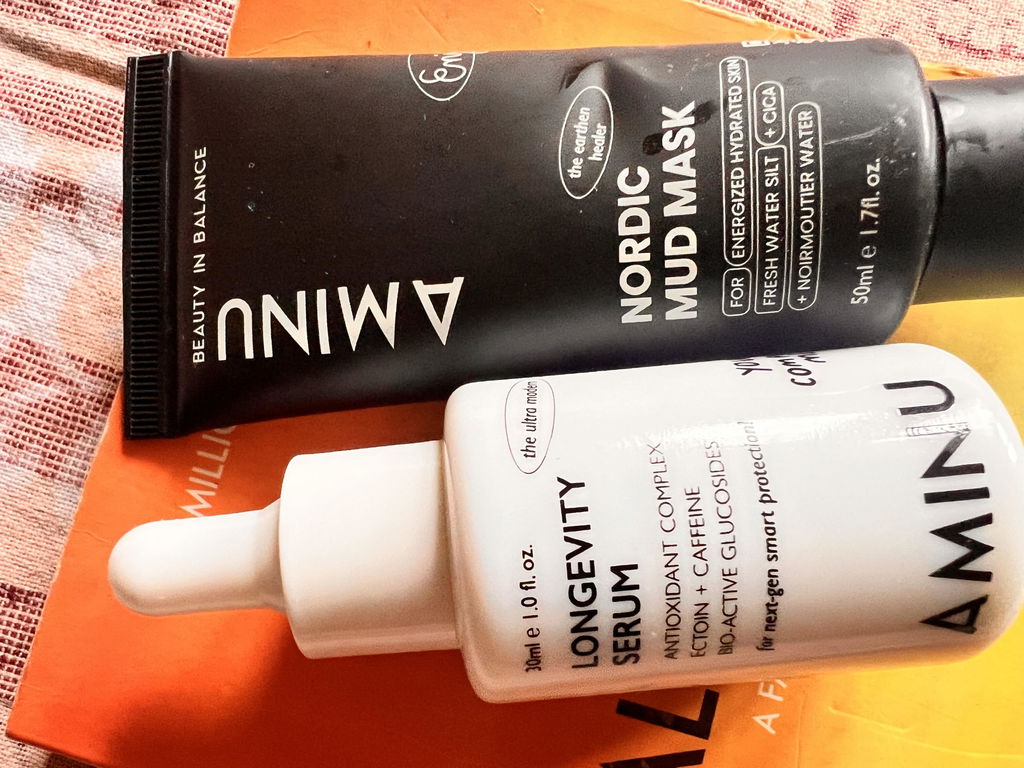
This is the reason Longevity Serum is designed for the AM routine.

Created by Aminu
Formulated with 16+ high-performance ingredients and 6 technologies, it is built to support skin during the part of the day where exposure is highest.
Helping skin stay balanced, supported, and more resilient as it moves through everyday conditions that contribute to the inflammation footprint over time.
The Takeaway;
So, as your skin responds to repeated exposure, the goal is not to avoid every source of stress. That is simply not realistic.
There will always be busy weeks, late nights, long commutes, celebrations, deadlines, and everything else that comes with real life.
What matters is recovering from them.
Supporting skin resilience does not stop life from happening.
It helps skin carry less of it forward.
P.S. If you're curious about what creates that load in the first place, read the Random Tuesday Theory.
How Aminu Supports Skin Longevity
FAQ’s
1. What is skin “inflammation” and what does it look like?
Skin inflammation is part of the skin's natural repair response to factors such as UV exposure, breakouts, irritation, pollution, or stress. It can appear as redness, sensitivity, dryness, or skin that feels less balanced than usual.
2. Can everyday stress really affect my skin?
Yes. Daily UV exposure, pollution, poor sleep, stress, overstimulation, environmental exposure, and irregular recovery habits may all contribute to ongoing skin inflammation and stress.
3. Does living in a city actually change how skin behaves over time?
Urban skin is constantly exposed to pollution, heat, UV exposure, indoor AC, stress, long screen hours, and irregular routines, all of which can affect recovery and skin resilience over time.
4. Can stress really trigger skin sensitivity and dullness?
Yes. Chronic stress may affect skin recovery, hydration balance, barrier function, and inflammation levels, making skin appear more fatigued, reactive, or dull.
5. What does chronic inflammation do to your skin?
Chronic inflammation breaks down your skin’s firm structure and causes constant dark spots, dullness, and sensitivity. When your skin is exposed to daily pollution, UV rays, and lifestyle stress, it gets stuck in a permanent state of irritation.
6. Why does recovery matter in skincare?
Because skin is constantly responding to everyday life. Recovery helps it restore balance and maintain resilience over time.